The Ultimate Beginner's Guide to Personal Finance in the US

Managing money is one of the most important life skills no one ever formally teaches you. Whether you just landed your first job, recently moved to the US, or simply feel like your finances are out of control, understanding the basics of personal finance can completely transform your life. This guide walks you through the essential pillars of US personal finance — budgeting, saving, debt, credit, and investing — in plain, actionable language.
Why Personal Finance Matters More Than Ever
The cost of living in the United States has risen dramatically over the past decade. Housing, healthcare, education, and even groceries consume a larger share of the average American's paycheck than they did a generation ago. According to the Federal Reserve, nearly 40% of Americans would struggle to cover an unexpected $400 expense. That's not a lack of income problem — for many, it's a lack of financial planning.
The good news? You don't need to be wealthy to build financial security. You need a system.
Build a Budget That Actually Works
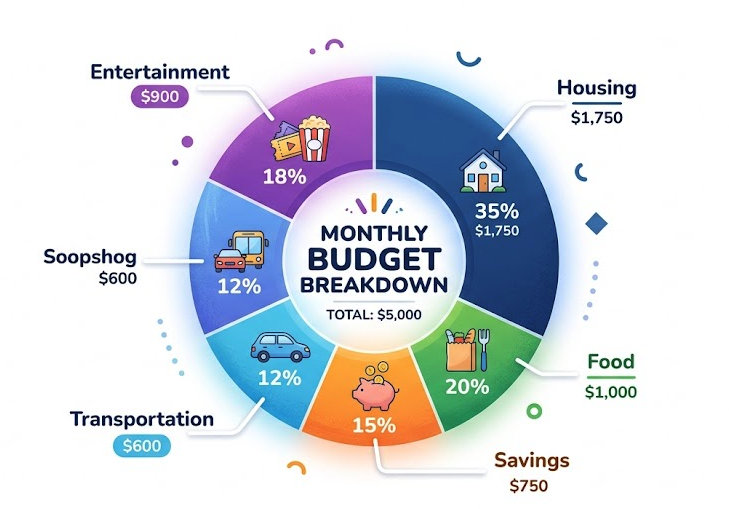
The word "budget" makes most people think of restriction. Flip that mindset: a budget is permission — it tells every dollar where to go before the month runs away from you.
The most popular budgeting framework in the US is the 50/30/20 rule:
- 50% of your after-tax income goes to needs — rent, utilities, groceries, transportation, minimum debt payments.
- 30% goes to wants — dining out, streaming services, hobbies, travel.
- 20% goes to savings and extra debt repayment.
This isn't a rigid law. If you live in a high-cost city like New York or San Francisco, your needs category might consume 65% of your income. The point is to be intentional. Track every dollar using apps like Mint, YNAB (You Need a Budget), or even a simple Google Sheet.
The most important rule of budgeting: do it before the month begins, not after it ends.
Build Your Emergency Fund First
Before you invest a single dollar, before you pay extra on your student loans, before you do anything else — build an emergency fund. This is 3 to 6 months of living expenses sitting in a high-yield savings account (HYSA), untouched unless a genuine emergency occurs.
Why? Because without an emergency fund, one unexpected car repair, medical bill, or job loss sends you straight to credit card debt. And credit card debt in the US carries an average interest rate of 20%+, which is one of the fastest ways to derail financial progress.
Top HYSAs in 2025 offer annual percentage yields (APYs) of 4.5% to 5.0% — Marcus by Goldman Sachs, Ally Bank, and SoFi are consistently rated among the best. Your money grows while it waits.

Understand and Build Your Credit Score
Your credit score is your financial reputation in the US. It's a three-digit number between 300 and 850, and it affects your ability to rent an apartment, buy a car, get a mortgage, and sometimes even land a job.
The five factors that determine your FICO score:
Payment history (35%) — Pay every bill on time, every time. Even one 30-day late payment can drop your score by 50–100 points.
Credit utilization (30%) — Keep your credit card balances below 30% of your limit. Below 10% is ideal.
Length of credit history (15%) — Don't close old credit cards. Age matters.
Credit mix (10%) — Having a mix of credit types (cards, auto loan, student loan) helps.
New credit (10%) — Don't apply for multiple credit cards in a short period.
A score above 740 unlocks the best interest rates on mortgages and car loans, potentially saving you tens of thousands of dollars over a lifetime.
Attack Debt Strategically
Not all debt is equal. There's a meaningful difference between a 4% mortgage and a 24% credit card balance.
Two proven debt payoff strategies:
The Avalanche Method — Pay minimums on all debts, then throw every extra dollar at the highest-interest debt first. Mathematically optimal — saves the most money in interest.
The Snowball Method — Pay minimums on all debts, then aggressively pay off the smallest balance first regardless of interest rate. Psychologically powerful — small wins build momentum.
Neither method is wrong. The best one is the one you'll actually stick to.
If you carry federal student loan debt, explore income-driven repayment plans and Public Service Loan Forgiveness (PSLF) if you work in the public sector. These programs exist specifically to make repayment manageable.

Start Investing Early (Even Small Amounts)
Once your emergency fund is in place and high-interest debt is under control, it's time to invest. The most powerful concept in personal finance is compound interest — your money earning returns on its returns over time.
Start with your employer's 401(k), especially if they offer a match. A 401(k) match is a 50–100% instant return on your contribution — no investment in the world beats that. Contribute at least enough to get the full match.
Next, open a Roth IRA if you're eligible. In 2025, you can contribute up to $7,000 per year. Your money grows tax-free, and qualified withdrawals in retirement are completely tax-free. For a 25-year-old investing $500/month, that account could be worth over $1.5 million by retirement — entirely tax-free.
For simple, low-cost investing, index funds (like those tracking the S&P 500) have consistently outperformed most actively managed funds over the long term. Vanguard, Fidelity, and Schwab all offer excellent, low-fee index fund options.
The One Rule That Ties It All Together
Spend less than you earn. Invest the difference. Stay consistent.
Personal finance in the US isn't complicated — but it does require discipline. The system isn't always designed to help you accumulate wealth; it's designed to make spending easy and saving hard. Awareness is your most powerful tool. Build the habits now, and your future self will be grateful.