Investing in the US Stock Market: What Every Beginner Needs to Know

The US stock market is the most powerful wealth-building tool available to ordinary Americans — and yet most people either avoid it out of fear or dive in without understanding what they're doing. Neither approach serves you well. This guide cuts through the noise and gives you a clear, grounded introduction to investing in the US stock market — what it is, how it works, and how to get started the smart way.
What Is the Stock Market, Really?
When you buy a share of stock, you're buying a small ownership stake in a real company. If that company grows and becomes more valuable, your shares grow in value too. If it pays dividends — a share of its profits — you receive that income as a shareholder.
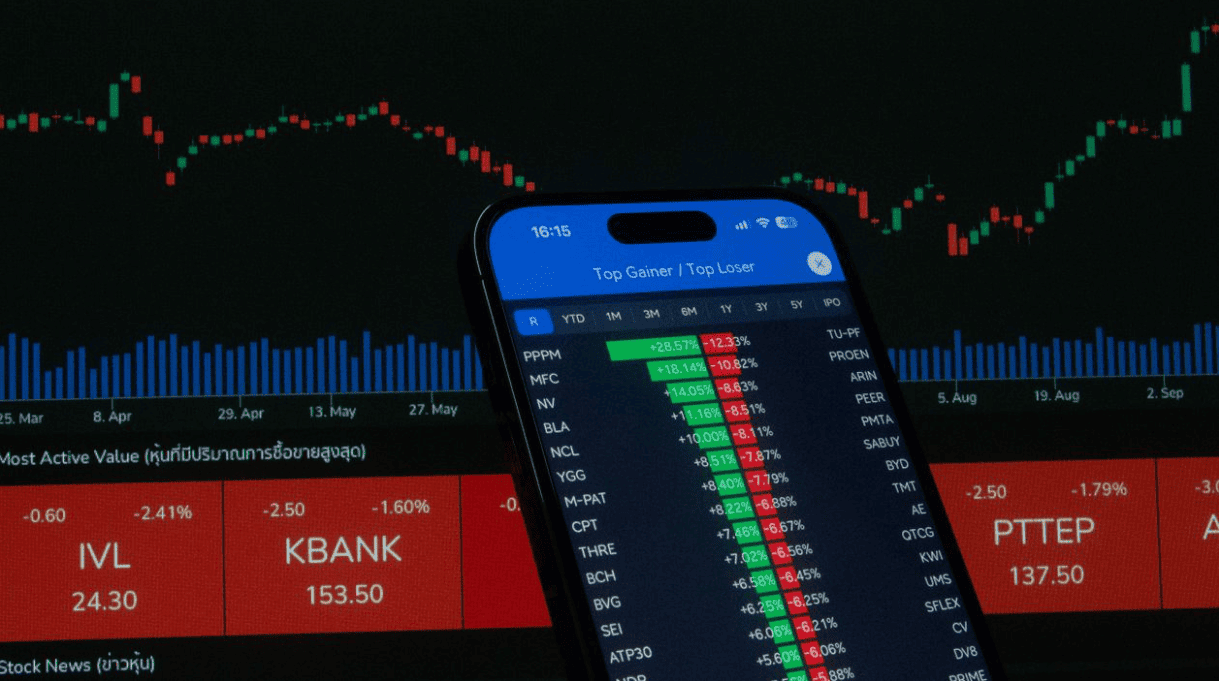
The US stock market is primarily traded on two exchanges: the New York Stock Exchange (NYSE) and the NASDAQ. Together, they list thousands of companies — from Apple and Microsoft to small regional businesses — with a combined market capitalization exceeding $40 trillion.
The market's overall performance is tracked by indices like the S&P 500 (the 500 largest US companies), the Dow Jones Industrial Average (30 major companies), and the NASDAQ Composite (technology-heavy).

The Most Important Concept: Time in the Market
The single most important thing a beginner investor needs to understand is this: time in the market beats timing the market.
The S&P 500 has delivered an average annual return of approximately 10% over the past century, including every crash, recession, and crisis in that period. Someone who invested $10,000 in an S&P 500 index fund in 1994 and did absolutely nothing would have over $200,000 today.
The investors who destroy their wealth are not those who pick the wrong stock. They're the ones who panic during downturns and sell, locking in losses, then miss the recovery.
Rule #1 of investing: don't try to outsmart the market. Join it.
Where to Start: Account Types
Before you buy a single share, you need the right account. The account type determines how your investments are taxed.
401(k) — Offered through your employer. Contributions are pre-tax (traditional) or post-tax (Roth). Traditional 401(k) reduces your taxable income now; you pay taxes on withdrawals in retirement. In 2025, you can contribute up to $23,500. Always contribute enough to get the full employer match first.
Roth IRA — Opened independently at any brokerage. Contributions are post-tax, but growth and qualified withdrawals are entirely tax-free. Maximum contribution in 2025: $7,000 ($8,000 if you're 50+). Ideal for younger investors who expect to be in a higher tax bracket in retirement.
Traditional IRA — Similar to a 401(k) in tax treatment — contributions may be deductible, withdrawals taxed. Useful when you've maxed your 401(k) and don't qualify for a Roth.
Taxable brokerage account — No contribution limits, no tax advantages, but full flexibility. Use after maxing tax-advantaged accounts.
What to Actually Invest In
For the vast majority of beginners, the answer is simple: low-cost index funds and ETFs.
An index fund tracks a market index — like the S&P 500 — by holding the same stocks in the same proportions as the index itself. Instead of betting on one company, you own a tiny piece of 500 of them. When the US economy grows, your investment grows with it.
Why index funds beat stock picking for most people:
Roughly 90% of actively managed funds underperform their benchmark index over a 15-year period, after fees. Professional fund managers with teams of analysts, billion-dollar research budgets, and decades of experience consistently fail to beat the index. The reason to believe you can is a strong one.
Top index funds to consider for beginners:
VTSAX / VTI — Vanguard Total Stock Market Index Fund. Covers the entire US stock market — large, mid, and small caps — at an expense ratio of just 0.03%.
FXAIX — Fidelity 500 Index Fund. Tracks the S&P 500 with a 0.015% expense ratio — one of the cheapest funds available anywhere.
VOO — Vanguard S&P 500 ETF. Same as FXAIX in exposure, tradeable like a stock throughout the day.
Dollar-Cost Averaging: The Beginner's Superpower
You don't need to invest a lump sum to get started. Dollar-cost averaging (DCA) means investing a fixed amount at regular intervals — say, $200 every month — regardless of what the market is doing.
When prices are high, your $200 buys fewer shares. When prices are low (during a correction or crash), your $200 buys more shares automatically. Over time, this smooths out your average cost per share and removes the psychological burden of trying to time the market.
DCA is how most Americans should invest — automated, consistent, and emotionally detached.
Common Beginner Mistakes to Avoid
Waiting for the "perfect time" to invest. There is no perfect time. The best time to start was yesterday. The second best time is today.
Checking your portfolio every day. Short-term volatility is noise. Long-term growth is signal. Daily checking leads to emotional decisions.
Putting all your money in one stock. Diversification is the only free lunch in investing. An index fund gives you instant diversification.
Ignoring fees. A 1% annual fee might sound small, but on a $100,000 portfolio over 30 years, it costs you over $90,000 in lost compounding. Always check expense ratios before investing.
Selling during a crash. Every major market crash in US history has been followed by a full recovery and new all-time highs. The investors who came out ahead were the ones who held — or bought more.
Getting Started: Your Action Plan
Open an account at Fidelity, Vanguard, or Schwab — all are excellent, commission-free platforms with no account minimums. Set up automatic monthly contributions into a broad market index fund. Increase your contribution percentage every time you get a raise. That's it. That's the entire strategy for building long-term wealth in the US stock market.
The path to financial freedom isn't exciting. It's automated, consistent, and boring — and that's exactly why it works.