Beyond Basic Polls: Using SurveyMonkey for Professional Market Research
At SurveyMonkey, we’ve seen thousands of businesses struggle. They gather tons of data, but they often struggle to find the insights hidden within it.

The Gold Rush for Consumer Insights 💰
In today’s hyper-competitive landscape, knowing your customer isn't just a competitive advantage—it's a survival requirement. The market is smarter, faster, and more demanding than ever before. If you're relying on gut feeling or superficial polls to make high-stakes business decisions, you're not just flying blind; you’re leaving money on the table.

At SurveyMonkey, we’ve seen thousands of businesses struggle. They gather tons of data, but they often struggle to find the insights hidden within it. We all know the drill: sending out a basic satisfaction survey and getting back a mountain of 'somewhat satisfied' responses that don't actually tell you what to change. This is precisely why professional market research matters. It transforms data from static statistics into an actionable roadmap.
This guide isn't about sending a quick office poll; it's about leveraging professional methodologies with a platform built for sophistication. We’re going to show you how to move from "What do people think?" to "What will people do?" using SurveyMonkey’s advanced toolkit. 🛠️
Phase 1: Precision Targeting – Defining Your True Audience 🎯
Professional research starts long before the first question is drafted. It starts with defining exactly who needs to answer it. A general ICP (Ideal Customer Profile) like "software companies in Europe" is a start, but it won’t give you granular, actionable data.
For professional-grade market research, you need surgical precision. You need to target niche segments, verify their professional background, and, critically, ensure they have actual purchasing power or decision-making influence.
Deep Data Access
This is where your research hits its first major hurdle: Access. Most organizations are restricted to their current customer list, creating a selection bias that skews the results.
With SurveyMonkey, you gain access to a powerful and diverse panel network. You aren't limited to the people you already know; you can target exactly the demographics or professional cohorts you need. Our network provides access to verified respondents with detailed B2B profiles, allowing you to filter by:
- Firmographics: Company size, location, and specific industry. 🏢
- Technographics: What tools and software do they currently use? (Crucial for competitive positioning). 💻
- Job Function & Seniority: Ensure you’re talking to a VP of Product, not a marketing coordinator. 💼
Dynamic Behavioral Data
This is where the 'pro' element really kicks in. Don’t just look at who people are; look at what they do. Are they visiting your competitors' pricing pages? Are they actively looking for alternatives? Using this type of active-intent data filters is what separates professional research from generic feedback.
Your Action Step: Start with a clear goal (e.g., "Identify the top feature requirements for VPs of Product at European FinTech firms with over 200 employees"). Then, use SurveyMonkey’s audience segmentation tools to create a precise panel, layering in relevant professional and behavioral filters.
Phase 2: Sophisticated Design – Asking the Right Questions 🤔
Once your audience is defined, it’s time to design. But simply stacking demographic questions won’t reveal consumer psychology. This phase is about methodology, logic, and building a conversational flow that encourages honest, detailed responses.
Professional research uses advanced question types and complex survey logic to dig deeper and provide context.
Advanced Question Types
A standard multiple-choice question might tell you what someone prefers, but not why or by how much. This is where 'pro' tools like MaxDiff (Maximum Difference Scaling) come in. It forces respondents to rank items from "most important" to "least important," eliminating the "everything is important" issue and providing clear prioritization.
Other advanced features like matrix questions (properly executed), slider scales, and even heatmaps allow for a more intuitive and nuanced data gathering process.
Logic and Personalization
A generic survey is a quick way to lose your audience. A professional survey is a dynamic conversation. We use advanced skip logic and question pipework.
- Skip Logic: If a respondent says they don't use a specific type of software, they shouldn't be asked detailed follow-up questions about it.
- Pipeline Logic: This is personalization at scale. A professional survey can 'pipe' answers into subsequent questions. If a respondent says their favorite coffee flavor is "caramel," the next question can ask, "How often do you purchase caramel-flavored coffee?"
This makes the survey feel curated, increasing completion rates and data accuracy.
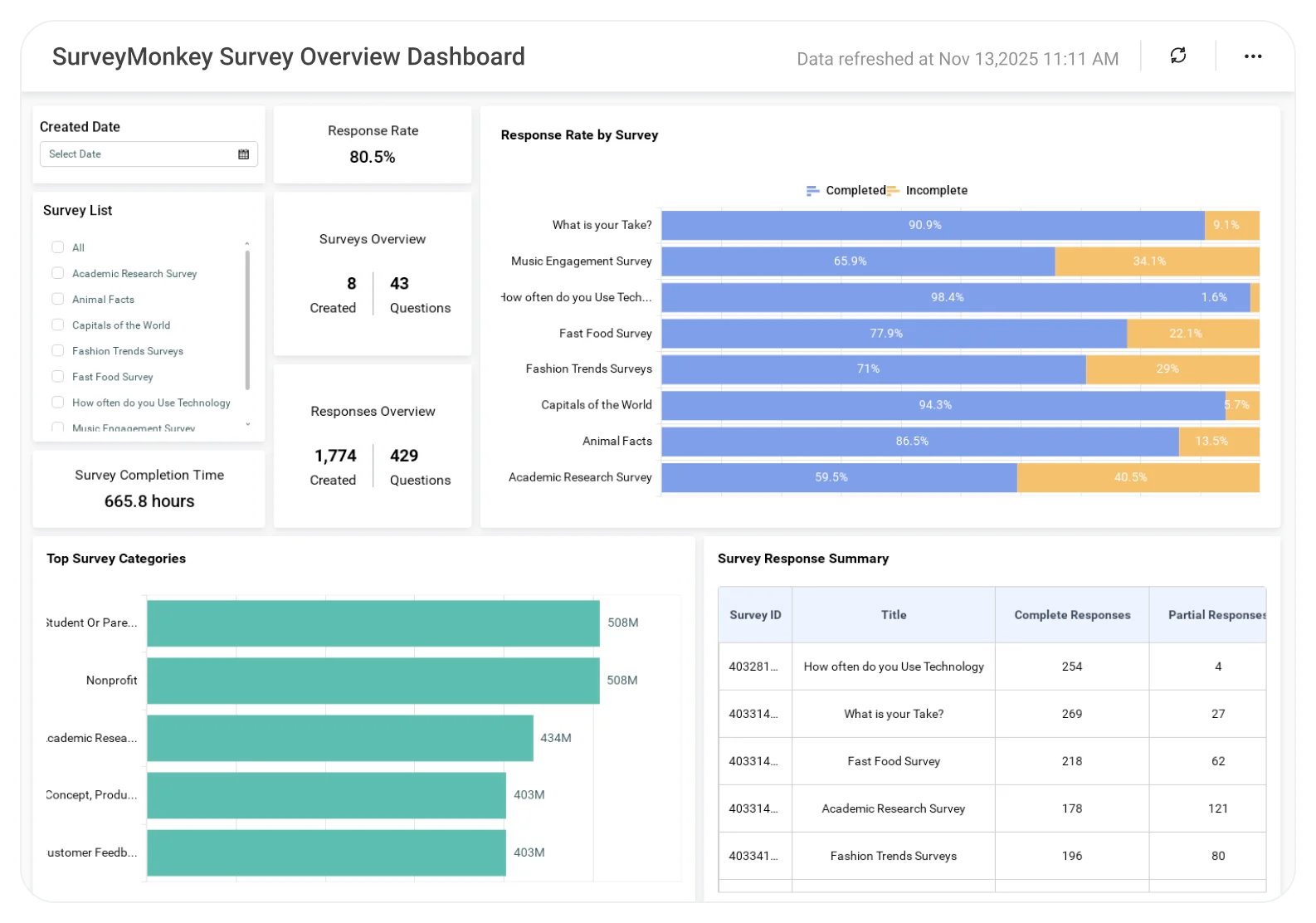
Your Action Step: Map out your survey flow like a conversation. Identify where a MaxDiff question might clarify priorities. Use skip logic to remove irrelevant sections for specific respondents, ensuring every question is impactful.
Phase 3: Impactful Analysis – Turning Data into Action 📊
The research is complete. You have the responses. But a professional researcher doesn't just present a slide deck with basic bar charts. They present a strategic narrative.
Professional market research analysis is about finding the correlation, identifying the drivers, and translating static data into actionable recommendations. This is where SurveyMonkey’s powerful reporting features really shine.
Advanced Reporting & Text Analysis
A pile of open-ended responses is a goldmine, but most teams dread reading hundreds of them. Professional text analysis (powered by NLP) automatically identifies key themes, sentiment (positive, negative, neutral), and even emerging topics within unstructured data.
Cross-Tabulation and Data Visualization
The real insight often lies at the intersection of different data points. You might find that "cost" is a low priority overall, but a top priority for companies with less than 50 employees. Professional researchers use cross-tabulation (filtering results by different responses) to uncover these critical correlations.
And crucially, professional research is about storytelling. SurveyMonkey provides advanced charting and visualization tools that transform complex data sets into a clear, compelling narrative that stakeholders can instantly grasp.
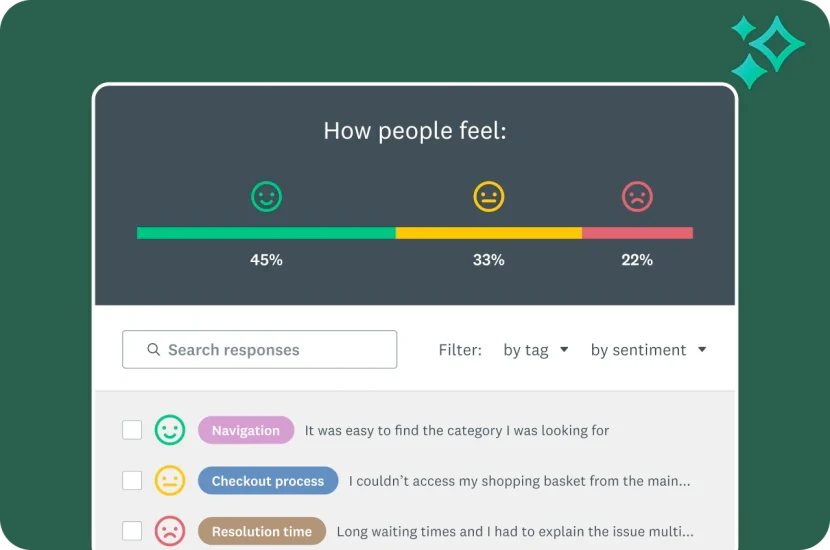
Your Action Step: Use SurveyMonkey's reporting tools to move beyond surface-level metrics. Create cross-tabs to see how different segments respond to key questions. Utilize the text analysis feature to immediately grasp the common pain points and drivers within qualitative feedback.
Conclusion: The New Era of Data Intelligence 💡
The market will continue to move faster. The consumer will continue to demand more. The organization with the best product might not win, but the organization with the best intelligence almost always does.
Building a thriving B2B sales pipeline isn't a dark art. It’s a process. And like any process, it can be optimized, streamlined, and, most importantly, made smarter.
Apollo AI Intelligence is not about replacing your sales team. It’s about giving them superpowers. 🦸 It’s about removing the tedious, manual work of prospecting so they can focus on what they do best: building relationships and closing deals.
In today's competitive landscape, professional market research is no longer a luxury; it’s your most critical strategic asset.
Are you ready to see what true data intelligence can do for your business? Schedule a demo with SurveyMonkey today and start building the professional market research capabilities your organization deserves. 📈