AI-Driven Product Review Aggregation: Navigating the 2026 Confidence Economy
In an era where "review inflation" and sophisticated bot-generated sentiment have diluted traditional metrics, a new currency has emerged: Verified Intent.
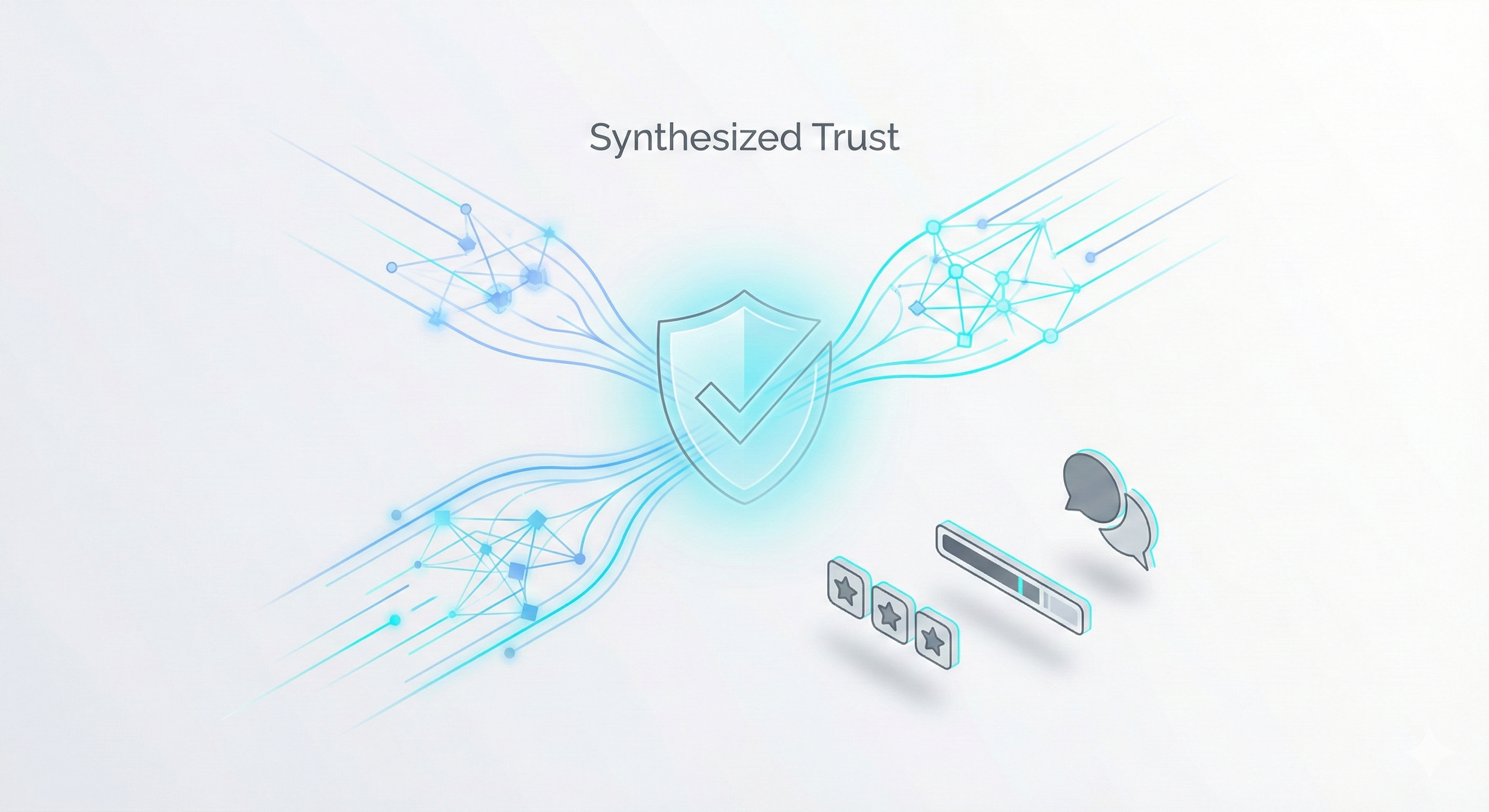
The five-star rating system is officially dead.
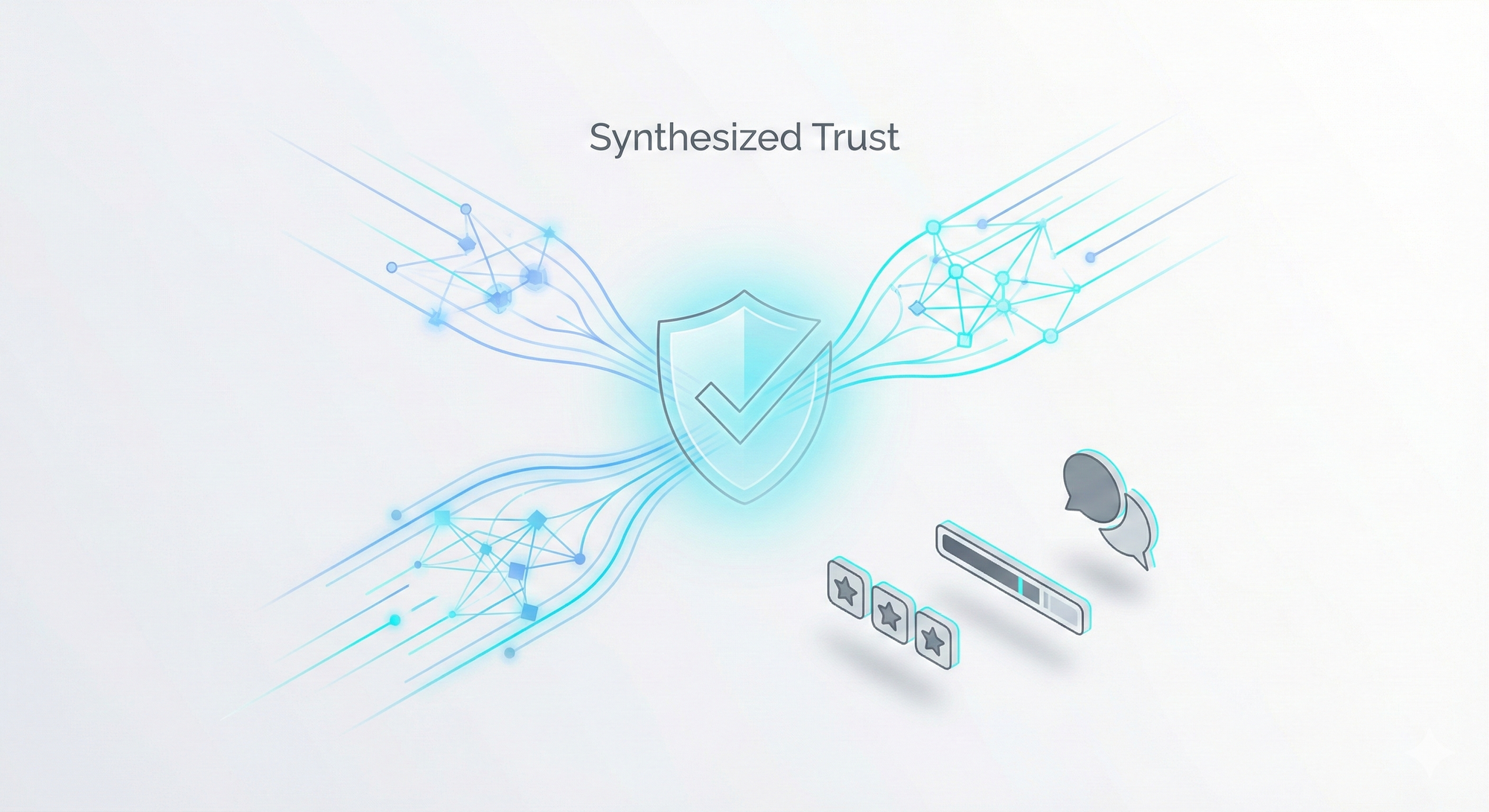
By the start of 2026, the digital marketplace reached a tipping point: 95% of consumers now report noticing significant inconsistencies in product feedback across different platforms. In an era where "review inflation" and sophisticated bot-generated sentiment have diluted traditional metrics, a new currency has emerged: Verified Intent.
For ReviewAgent, this shift represents more than a technical upgrade—it’s a fundamental redesign of how human beings trust machines to help them buy.
The 2026 Trust Gap: Why Traditional Reviews Failed
Between 2023 and 2025, the barrier to entry for generating "authentic-sounding" reviews dropped to zero. This led to what economists call the "Confidence Economy"—a state where 37% of consumers now start their product journey with an AI assistant rather than a search engine, specifically to filter out the noise.
However, a recent study shows a paradox: while 58% of shoppers use AI for research, only 17% trust it enough to complete a purchase without human-validated signals. AI-driven product review aggregation is the bridge across this gap.
What is AI-Driven Product Review Aggregation?
In 2026, aggregation is no longer about pulling text into a list. It is a multi-modal sentiment deserialization process. Here is how the ReviewAgent engine processes the "Truth Layer" for a single product:
- Cross-Platform Triangulation: Analyzing reviews from marketplaces, social media (TikTok/Reddit), and independent blogs simultaneously.
- Synthetic Sentiment Detection: Identifying patterns in syntax that suggest LLM-generated "puff pieces" vs. genuine human experience.
- Entity-Based Extraction: Pulling specific data points (e.g., "battery life in sub-zero temps") rather than vague adjectives like "great" or "bad."
📊 The Evolution of Shopping Trust
| Metric | Traditional Reviews (2020-2024) | AI-Driven Aggregation (2026) |
| Focus | Star Ratings (Quantity) | Verified Sentiment (Quality) |
| Analysis | Keyword matching | Semantic Intent & Entity Extraction |
| Trust Signal | "Verified Purchase" badge | Cross-platform behavioral consistency |
| User Value | Reading 10-20 reviews | 3-second "Truth Summary" |
How Consumer Trust is Evolving: The "Agentic" Shift
Trust in 2026 is active, not passive. Consumers no longer trust a static score; they trust a process. We are seeing three major shifts in behavior:
1. From "What" to "Why"
Users are no longer asking "Is this a good laptop?" They are asking, "Why are people in my specific demographic (e.g., freelance video editors) returning this laptop after 30 days?" AI aggregation provides the causal link that raw data misses.
2. The Rise of "Micro-Expertise"
Search engines and AI Overviews now prioritize "Experience" (the extra 'E' in EEAT). Review aggregation in 2026 prioritizes reviews that contain original photos, technical nuances, and "long-tail" usage scenarios.
3. Transparency as a Feature
The most trusted platforms are those that show their "homework." If an AI summarizes a product as "unreliable," it must cite the specific, verified human reviews that led to that conclusion.
The ReviewAgent Framework: Building 10x Trust
At ReviewAgent, we employ the "Human-Centric Verification" protocol. We don't just summarize; we verify. Our AI identifies "Logic Gaps"—instances where a 5-star rating is paired with a description of a faulty product—and flags them for the user.
"In 2026, the role of AI isn't to tell you what to buy; it's to protect you from what you shouldn't buy."
FAQ: The Future of AI and Product Reviews
How does AI detect fake reviews in 2026?
Modern AI uses stylometry and metadata auditing. It looks for "linguistic fingerprints" common in bot-farms and checks if the review timing aligns with real-world shipping logs and purchase patterns.
Is AI-driven aggregation biased?
Bias is a risk, which is why "Algorithmic Transparency" is a core 2026 SEO standard. Trusted aggregators like ReviewAgent use Open-Source Sentiment Models that can be audited for neutrality.
Can I trust AI summaries more than individual reviews?
Yes, because a summary acts as a consensus engine. While one review might be an outlier (a "lemon" product or a "hater"), aggregation identifies the statistical reality of the product's performance.
🚀 Optimization Summary
- Meta Title: AI Product Review Aggregation: The 2026 Trust Revolution
- Meta Description: Discover how AI-driven review aggregation is solving the 2026 trust crisis. Learn why star ratings are dead and how Verified Intent is the new shopping currency.
- Image Suggestion: A high-tech "Sentiment Heatmap" showing a product being analyzed across Reddit, Amazon, and YouTube.
- Alt-text: AI-driven dashboard showing product sentiment analysis and fake review detection patterns in 2026.
- Suggested External Links: